Just over a year ago, the Taliban entered the capital city of Afghanistan, Kabul, and took command of the country.
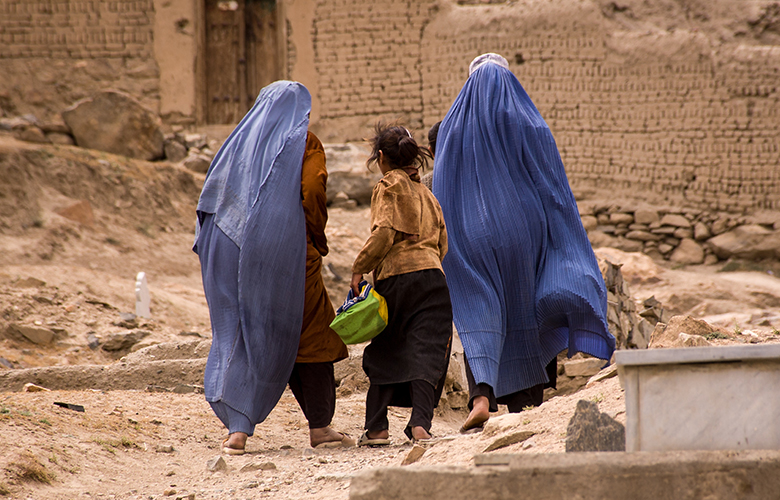
Since then, women and girls have been suffering under a discriminatory and violent regime, unable to attend school, participate in sport, requiring a male companion to travel and losing their jobs.
This week, women have taken to the streets to protest the senseless killing of dozens of students, mostly girls, by a suicide bomber at an educational institute in Kabul.
Let’s take a closer look at the reality for women in Afghanistan.
What happened before the Taliban’s August 2021 takeover?
Between 1996-2001, the Sunni Islamic fundamentalist group controlled most of Afghanistan. However, following the 9/11 attacks in New York, the US overthrew the regime when it exhibited unwillingness to surrender terrorist leader, Osama bin Laden.
In 2014, the US-led coalition officially ended its combat mission, putting the Afghan National Defense and Security Forces (ANDSF) in charge of the country’s security. In early 2020, the US government signed a peace deal with the Taliban, proposing a complete withdrawal of US troops within the next fourteen months, and a pledge from the Taliban to cease fuelling terrorist activities in their territory.
Unfortunately, US forces continued to conduct air strikes and raids, targeting the Taliban, which likewise continued attacking ANDSF targets and the Afghan government.
On August 15, 2021, Taliban fighters entered Kabul, announcing they’d taken over the presidential palace, as Afghan President Ashraf Ghani fled the country and his government collapsed.
Am I allowed to go school?
In March this year, Taliban authorities announced that girls’ above sixth grade were no longer allowed to attend school.
In the country of 39 million, the law is a blend of Islamic law, state legislation, and local customary decrees — often containing misogynistic policies that oppress women and girls.
As of November last year, girls in only seven of 34 provinces across the country had access to secondary schools. While female university students are segregated from their male peers and required to wear hijabs.
Up to two-thirds of Afghan girls do not attend school — and just 37 percent of adolescent girls are literate, compared to 66 percent of adolescent boys.
The 2020 UN Development Program report ranked Afghanistan 169th in women’s education, citing corruption by officials in the Afghan Education Ministry as a reason for funding and resource shortages.
In Afghanistan, women and girls are also expected to fulfil traditional roles of wives and mothers, bearing the load of domestic and human-caring duties.
Governments and NGOs around the world have vowed to support girls’ education in Afghanistan once it is permitted by the Taliban, with the US Special Representative for Afghanistan announcing that the US would pay teachers’ salaries if the Taliban reopened girls’ schools.
In March this year, the World Bank pledged more than $US1 million to support girls’ education in Afghanistan.
Gender Equality
Sadly, there’s a reason why Afghanistan has consistently come last or close to last in global gender index rankings.
Not only are girls and young women denied any formal education, and more than fifty percent are not employed, they are frequently and systemically barred from jobs outside of teaching, government positions and aid work — since these roles are deemed unsuitable for men.
One decree issued in May this year for women, advised that the “first and best sign of observing hijab is not to leave the house,” while another ordered all Afghan women to cover their faces in public.
Domestic violence is also rife, with at least nine out of 10 women in Afghanistan reportedly experiencing at least one form of domestic violence.
Child marriage is likewise tragically common. UNICEF estimates that 28 per cent of Afghan women aged 15–49 years are married before the age of 18 — a figure that many experts are concerned will rise as education for girls continues to be denied. The international recommended minimum age of marriage is 18. In Afghanistan it is just 15.
Since the takeover of the Taliban in August last year, the Women’s Affairs Ministry has been collapsed and replaced by a ‘Ministry for Preaching and Guidance and the Propagation of Virtue and the Prevention of Vice’ — which issues restrictions on women’s rights and freedoms in frightening ways.
https://twitter.com/4afghanwomen/status/1574836243858427914
Inspiring women to follow on Social:
Several women from Afghanistan are reporting on the reality of life under the Taliban regime. Here’s a few you should follow:
https://twitter.com/TOLOnews/status/1337009047137099777
Sara Seerat
This 29-year-old Afghan journalist was a former adviser to the Afghan High Council for Women, and has escaped to Berlin, where she continues her activism, shedding light on the horrifying violence women face in Afghanistan.
https://twitter.com/SaraSeerat/status/1575770059489746945
Fawzia Koofi
As a long-time Afghan politician and activist, Koofi has continued to use her voice to advocate for the rights of women and children in Afghanistan. Most recently, she has travelled around the world, meeting with government officials to strategies ways to put political pressure on the Taliban.
https://twitter.com/Fawziakoofi77/status/1576846346543562752
https://twitter.com/Fawziakoofi77/status/1576538198893035520
https://twitter.com/Fawziakoofi77/status/1575440921495207937?ref_src=twsrc%5Egoogle%7Ctwcamp%5Eserp%7Ctwgr%5Etweet
Zarqa Yaftali
As the director of the Women & Children Legal Research Foundation in Kabul, Yaftali is vocal in promoting women’s rights in her country, frequently posting about incidents and issues on social media and campaigning against violence against young girls.
https://mobile.twitter.com/AmuTelevision/status/1576470384462864384
https://mobile.twitter.com/ZarqaYaftali/status/1576017238020493313
Organisations to follow:
UN Women — Afghan Emergency Appeal
https://unwomen.org.au/get-involved/donate/afghanistan-emergency-appeal/?gclid=Cj0KCQjwkOqZBhDNARIsAACsbfKEywAb0Zt91jG0ZObkLdR2ceDzzO7VtzAZ04gfTfLYWAVkH0g3-F0aAm7lEALw_wcB
Women for Afghan Women
https://womenforafghanwomen.org
CARE Australia – Afghanistan Emergency Appeal
https://www.care.org.au/appeals/afghanistan/
Women for Women International
https://www.womenforwomen.org/?promo_redirect=no
Where can you get more information:
Afghan Women’s Advocacy Group
https://mobile.twitter.com/AfgWomAdvGrp
https://mobile.twitter.com/UNAMAnews/status/1576766575629467648
UNAMA News
The United Nations Assistance Mission in Afghanistan
UN Women Afghanistan
https://twitter.com/unwomenafghan?ref_src=twsrc%5Egoogle%7Ctwcamp%5Eserp%7Ctwgr%5Eauthor
UNFPA Afghanistan
The United Nations Population Fund in Afghanistan
https://mobile.twitter.com/UNICEFAfg/status/1571385253003988994
FAO in Afghanistan
Food and Agriculture agency of the United Nations
https://www.fao.org/afghanistan/en/
ICRC Afghanistan
International Committee of Red Cross in Afghanistan
https://www.icrc.org/en/where-we-work/asia-pacific/afghanistan
https://mobile.twitter.com/ICRC_af/status/1576802777639972864

What’s going on in Afghanistan? An explainer
by Women’s Agenda
Tuesday 11 October 2022